

Rural Partnerships Institute Consortium Meeting brings together three universities to explore relationships and projects with rural partners
The University of Wisconsin–Madison hosted the 2026 Rural Partnerships Institute Consortium Meeting on Thursday and Friday, July 16 and 17, on campus. The meeting welcomed members of the three institutions involved in the Institute for Rural Partnerships, a consortium that was launched in 2022 with $28 million in funding from the U.S. Department of Agriculture with the goal of supporting rural communities’ needs.
The consortium is composed of rural partnership institutes at the Auburn University Rural Partnerships Institute, the University of Vermont Leahy Institute for Rural Partnerships and the UW–Madison Rural Partnerships Institute. The main objective of the meeting was to gather together members of these institutes to discuss the impacts, successes and challenges of the consortium to date, both now and looking ahead to the future.
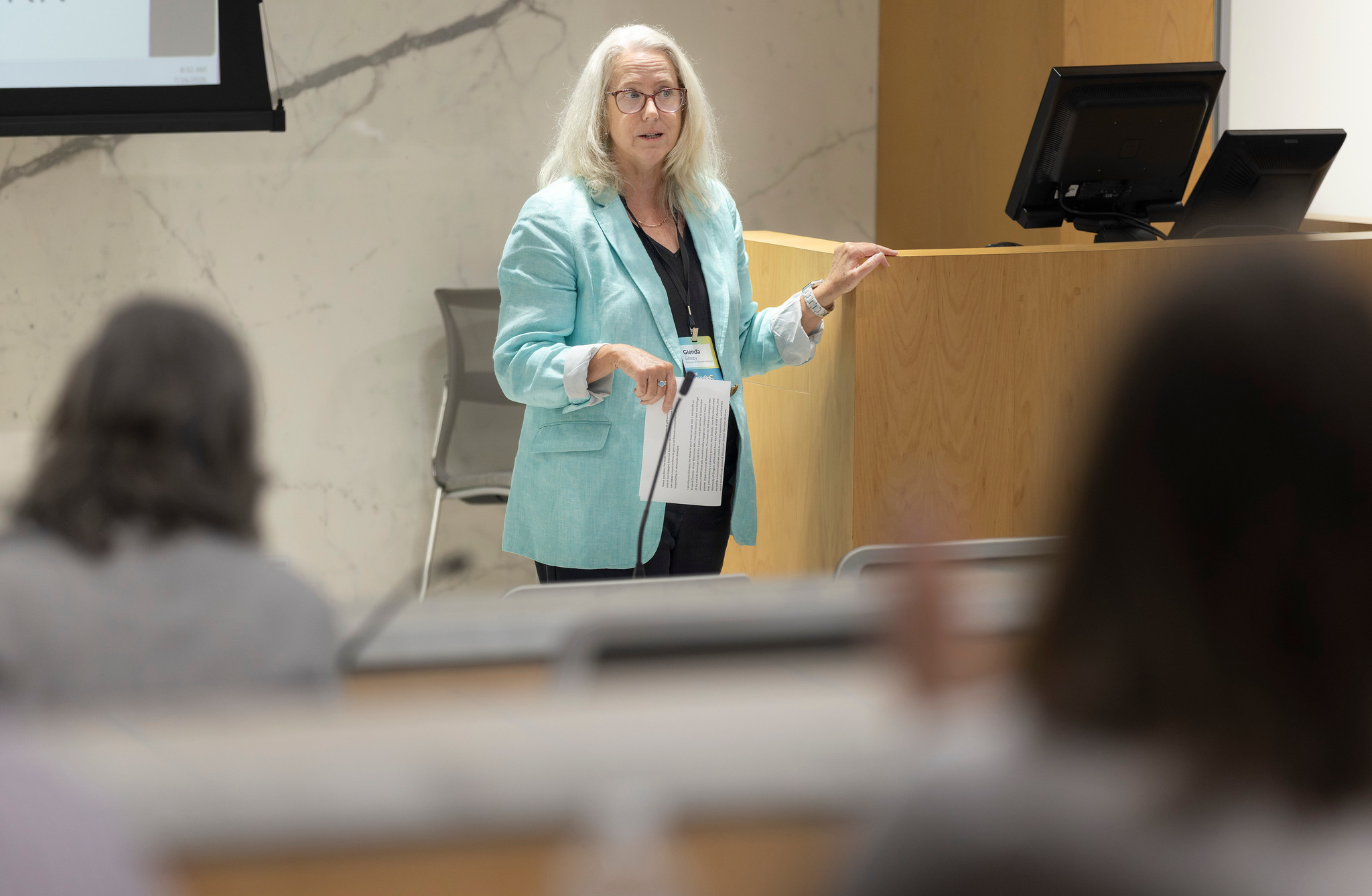
“Working together with Vermont and Auburn over the past three years has yielded important impacts on our respective states, each of which has a large rural population,” said Glenda Gillaspy, director of the UW–Madison Rural Partnerships Institute. “We are engaging in novel research and creating opportunities for rural citizens, which is at the heart of the land-grant mission of all three institutions.”
Representatives from all three campuses, including directors of their respective institutes as well as researchers and staff members, met at the UW–Madison’s Center for Dairy Research over two days. The meeting marks the third such consortium meeting, the previous two held at the other universities.
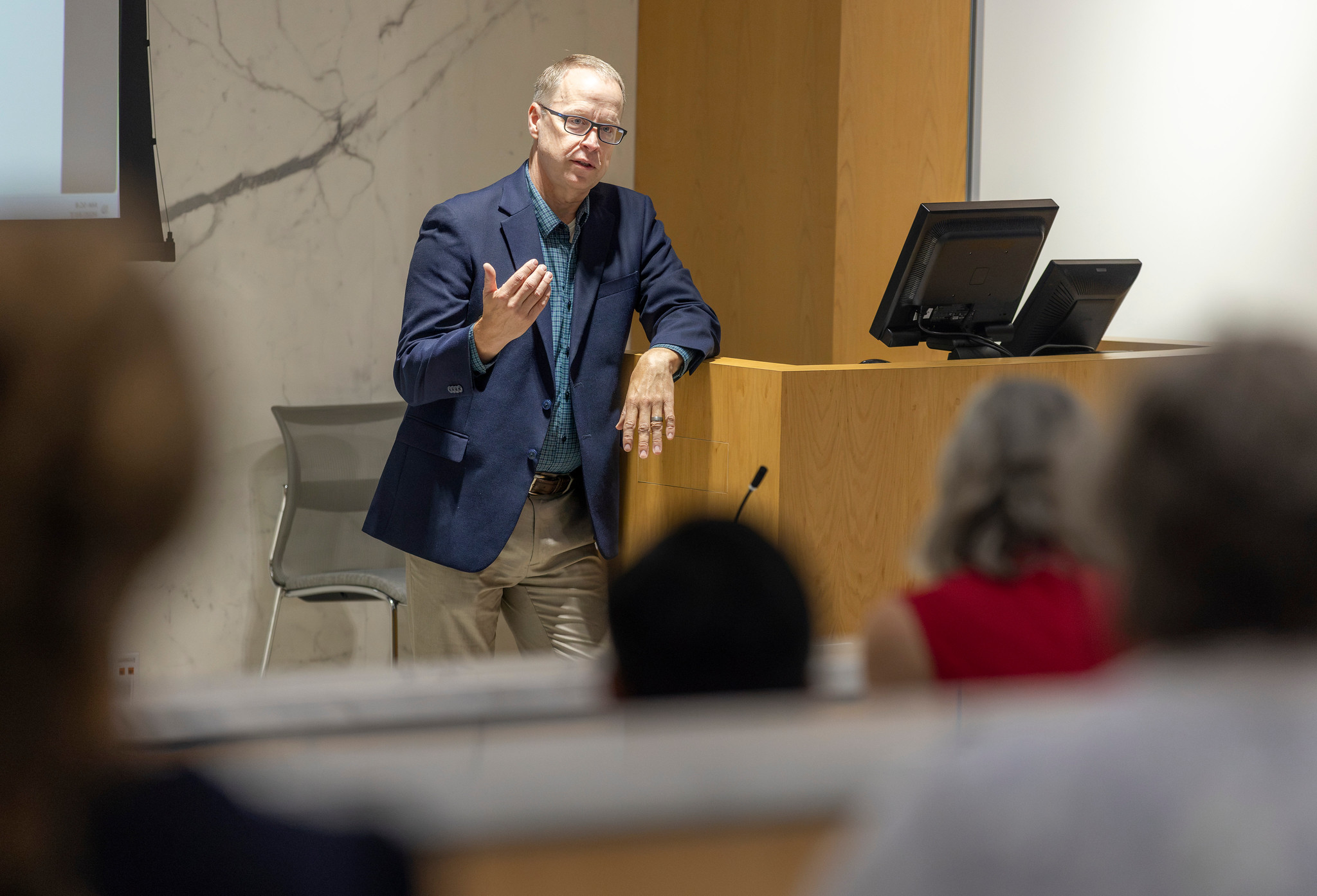
“Partnership with rural communities is part of the institutional DNA of land grant universities,” said John Zumbrunnen, UW–Madison provost. “Building successful partnerships depends on authenticity, curiosity and meaningful, two-way communication. That’s the commitment that powers the Rural Partnerships Institute.”
Also offering words of welcome were Hinu Smith, executive director of the Ho-Chunk Nation Department of Agriculture, and Glenda Gillaspy, director of the UW–Madison Rural Partnerships Institute. Jay Akridge of Purdue University then offered his expertise on how to turn pilot campus initiatives into permanent efforts. Senator Tammy Baldwin, who was instrumental in securing funding for UW–Madison, also sent remarks via video message.
“Researchers are showing where partnership and innovation can go. From groundwater pollution to increasingly severe weather, the Rural Partnerships Institute has been a proven success in taking on these challenges,” said Baldwin. “This is not just a worthy investment but a necessary one. By funding your work, we are investing in the safety and livability of our rural communities so that they can continue to prosper.”
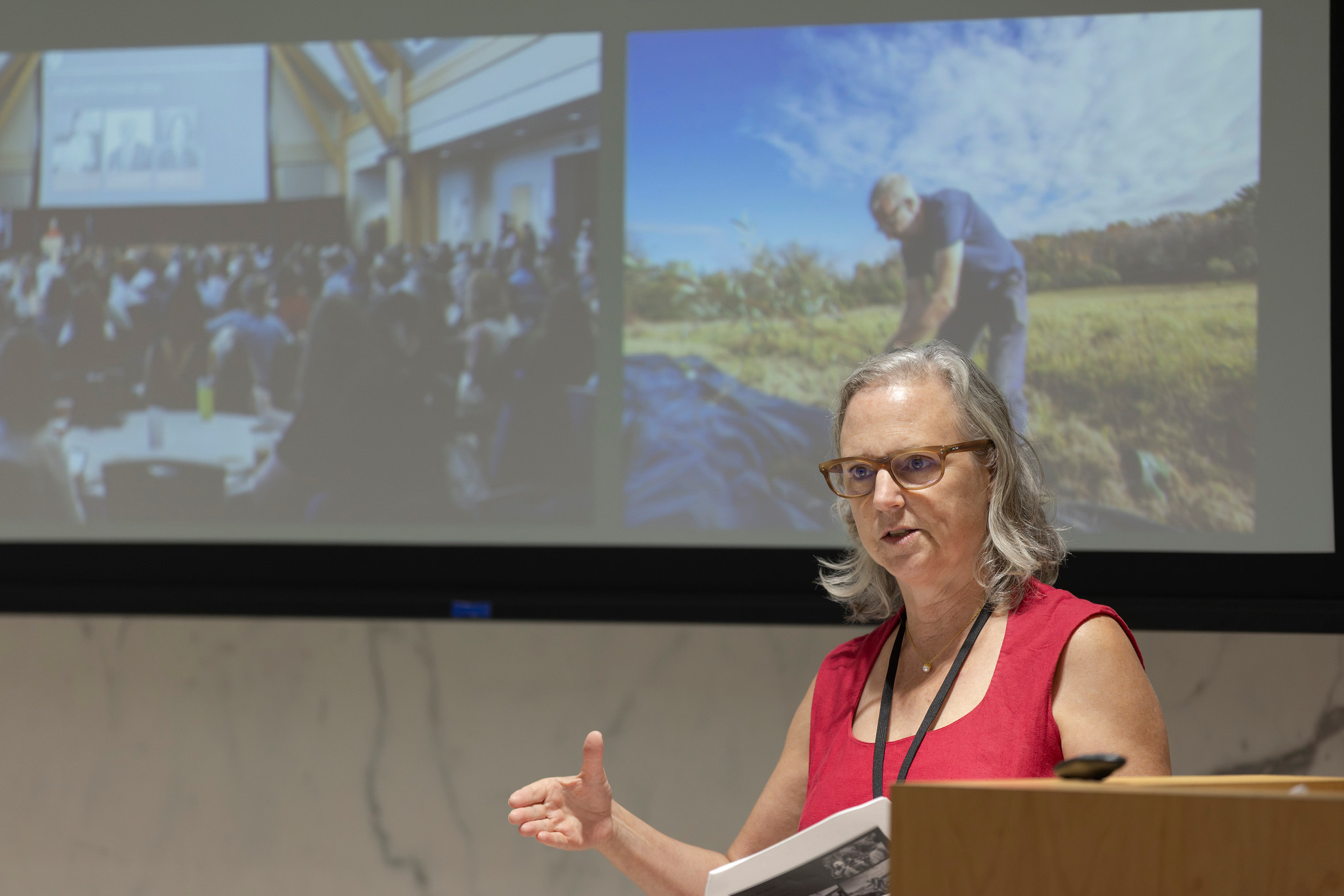
The event included talks about the origin and models of the three institutes that make up the consortium. Researchers from each institute gave examples of the projects they were conducting and the impacts being seen and reported from across their states from strengthening community schools to addressing cybersecurity vulnerabilities in the forestry industry to preparing for rural weather extremes.
“The success of our partnerships really emerges out of our engagement across the state,” said Patricia Coates, director of the University of Vermont Leahy Institute for Rural Partnerships. “Community needs partnered with university resources support more prosperous rural economies and communities.”
Oladiran Fasina, director of the Auburn University Rural Partnerships Institute, echoed the importance of relationships. “We don’t take this opportunity lightly. It’s not common to have this work across institutions,” he said. “We’re working with people who are passionate, and we have to trust each other and continually listen to stakeholders.”
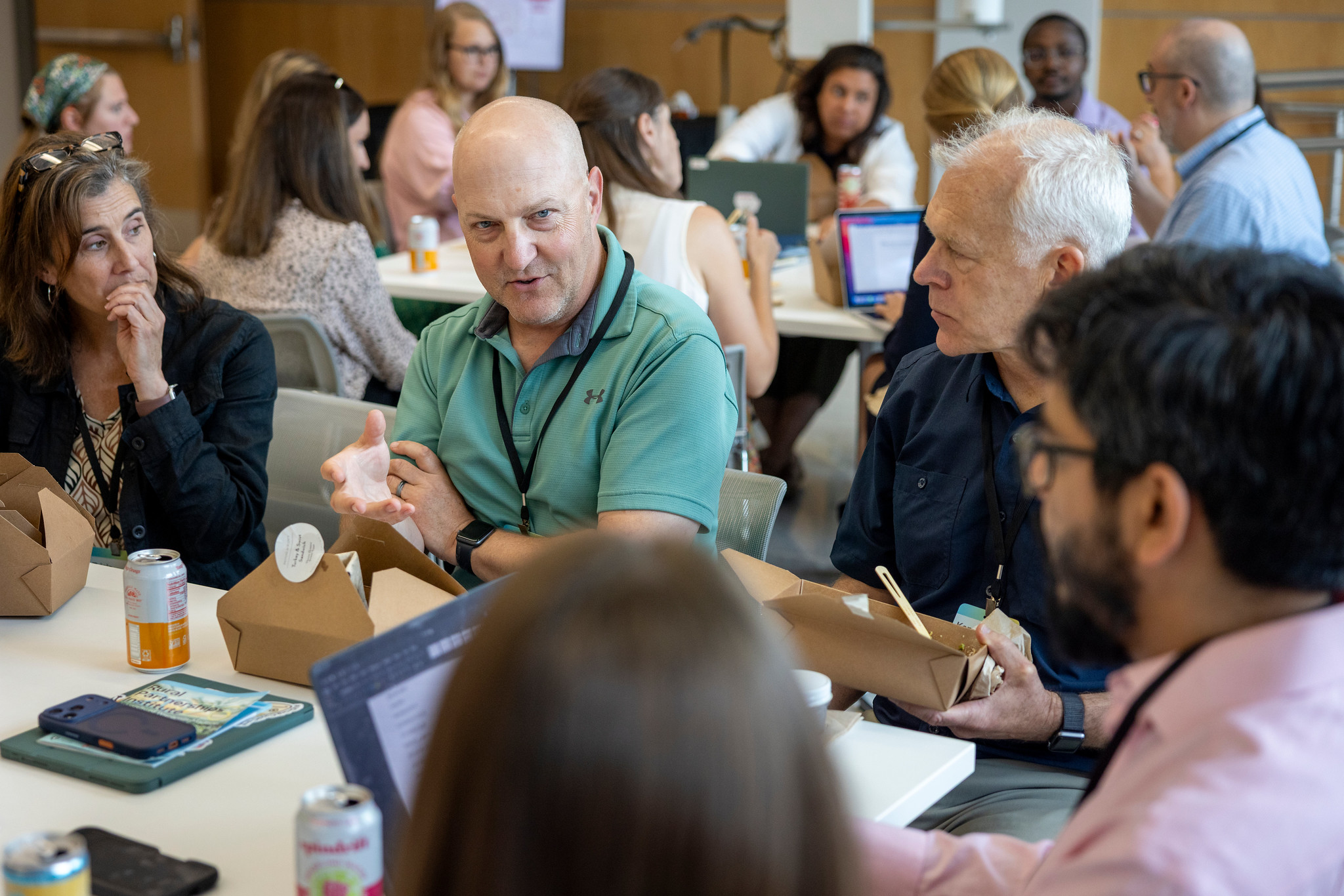
Thursday’s lunch was a working session during which leadership, researchers and staff discussed the impacts of projects in different groups. Members reflected on how the institutes and work being done has changed communities, the universities, various partners and the body of knowledge around rural issues.
After lunch, attendees were offered the opportunity to learn more about UW–Madison through one of three outings. The first group learned about the ancestral Ho-Chunk land occupied by the university and heard stories of the Indigenous people. Another group toured the Center for Dairy Research including its sensory booths and pilot plant used for product innovation and training. The final outing was a demonstration of Indigenous food traditions in which members of the Oneida, Bad River and Ho-Chunk tribes discussed Indigenous food practices as they prepared soup, maple sugar, hominy and other dishes.
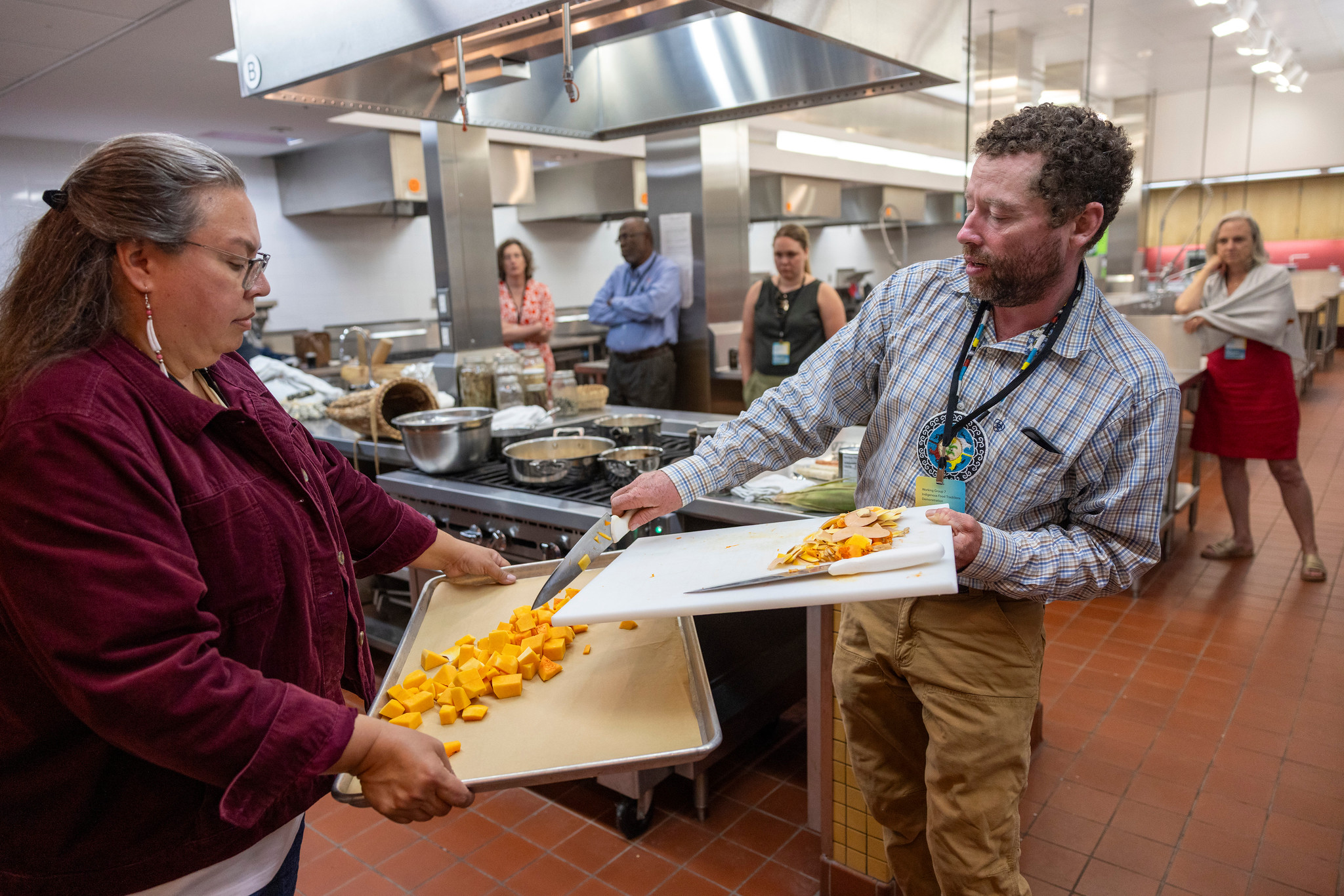
“It’s been really phenomenal working with our communities and seeing people thrive,” said Hinu Smith, executive director of the Ho-Chunk Nation Department of Agriculture. “And part of that is because of our relationship with the university. We can connect with people and have a really great experience in addition to exchanging knowledge. It makes learning that much more profound.”
The second day of the meeting opened with a keynote speech from Loka Ashwood, professor of community and environmental sociology at UW–Madison. She spoke about the lingering love of place and the choice of many rural Americans to remain in and strengthen their communities despite the challenges.
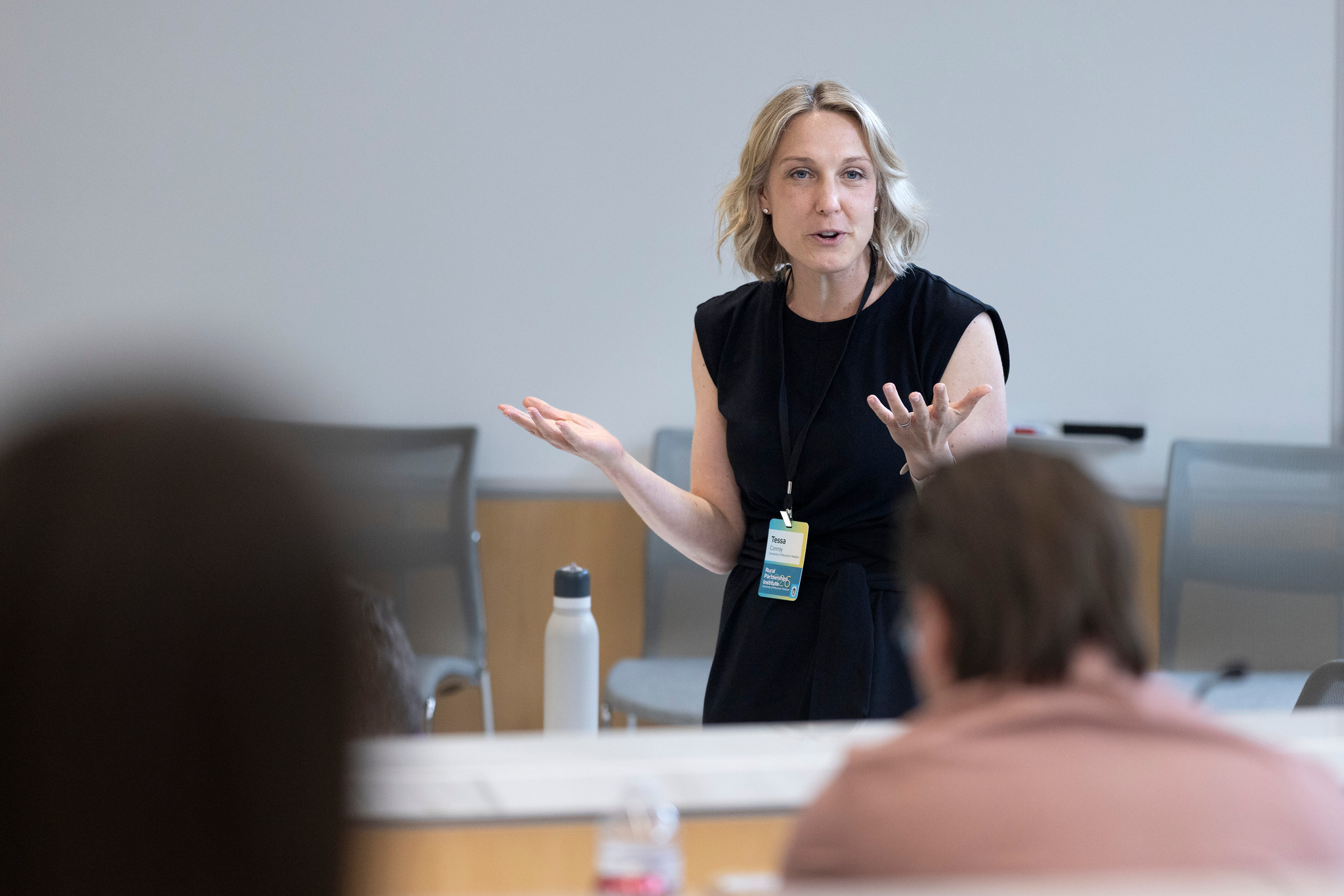
Another breakout session asked attendees to discuss the challenges and lessons learned in three years of the rural partnership institutes. They also considered how those ideas could inform further partnerships between universities and various communities. The formal program ended with a group discussion about how to sustain rural partnership institutes as well as the relationships with rural communities and the role of land-grant universities in rural development. An informal lunch with further opportunities for discussion closed the meeting.
“These institutes are connecting researchers, experts and groups that may not meet otherwise,” said Tessa Conroy, meeting director and associate professor and extension specialist in the Department of Agricultural and Applied Economics. “Partnerships and trust building are instrumental in how effective our work is, and there’s a shared passion among our partners to keep rural communities strong.”