

New faculty profile: Chaoqun Lu studies global change ecology, ecosystem modeling and ag sustainability
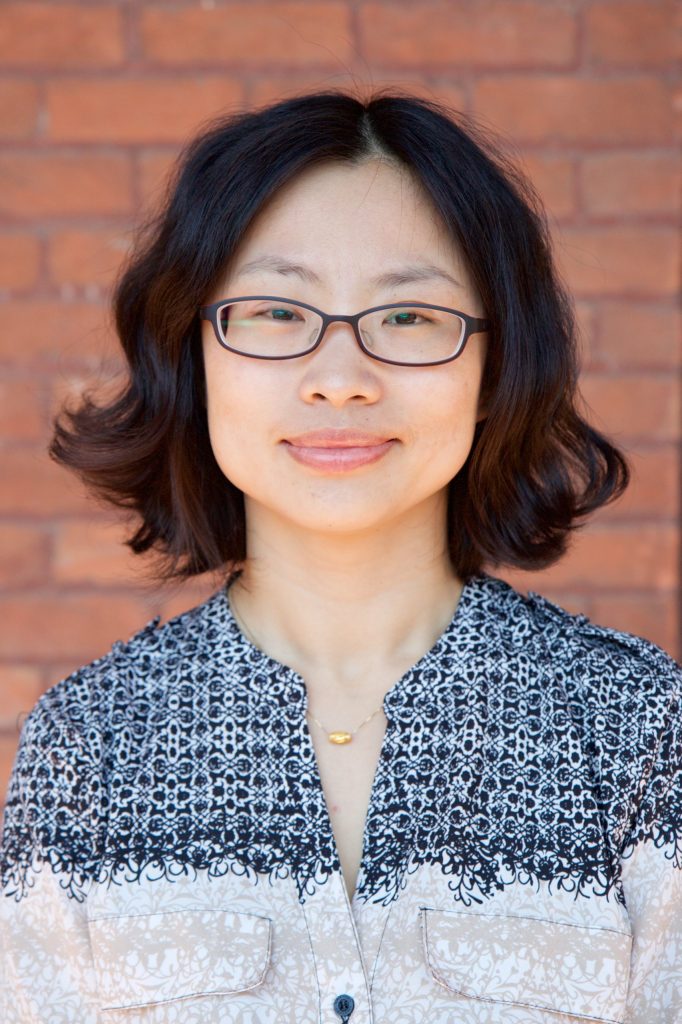
Chaoqun Lu joined the UW–Madison faculty in January 2026 as a professor in the Department of Soil and Environmental Sciences.
What is your hometown? Where did you grow up?
I was born and grew up in Inner Mongolia, a northern region of China on the Mongolian Plateau. While the region shifted from nomadic grazing to intensive agriculture long before my time, I grew up experiencing some of its impacts, like frequent dust storms. Thanks to grassland protection and conservation efforts, environmental conditions in my hometown have improved a lot in recent years. Inner Mongolia is also one of China’s major dairy‑producing regions, with a landscape that blends crop production and dairy farming, sharing some similarities with Wisconsin.
What is your educational/professional background, including your previous position?
I was trained as a quantitative ecosystem ecologist and earned my PhD in ecosystem ecology jointly from the Chinese Academy of Sciences and Auburn University. Before moving to Madison, I spent more than ten years at Iowa State University, where I served as an assistant professor and later as an associate professor.
What is your field of research, and how did you get into it?
My research centers around global change ecology, ecosystem modeling, and agricultural sustainability. Growing up in my hometown, I saw how powerful dust storms could be. Those experiences sparked my early interest in how people, land use, and nature are connected. My PhD work examined how human-driven nitrogen enrichment affects carbon cycling, leading me to broader questions about interacting global change factors. Early in my career, my work focused mostly on modeling assessment at global and national scales. Living in Iowa and working with colleagues committed to reducing nutrient pollution from agricultural lands made me think more about practical, local and regional environmental challenges, and the fundamental scientific questions behind them.
What are the main goals of your current research program?
My current research aims to understand and quantify how climate, land use, and human management practices work together to shape land ecosystem functions and the key processes linking land with air and water. We also leverage data and modeling capability to explore questions that are difficult or costly to test in the real world. For example, we test different climate and management scenarios on computers to identify practical, low-hanging opportunities to improve resource‑use efficiency, strengthen climate resilience, reduce pollution, and mitigate climate change. Here is my lab webpage with more details of our research: Macrosystems Ecology Lab
What was your first visit to campus like?
My first visit to campus was for my interview—and it went well! During my visit, Doug Soldat, the chair of SES, mentioned that Franklin H. King, the author of Farmers of Forty Centuries, was once a professor in the Soil Department at UW–Madison. More than 100 years ago, Dr. King traveled in China, Japan, and Korea and carefully documented how farmers there managed their land and recycled nearly everything that could provide nutrients. I read that book when I was a graduate student and really enjoyed it. Now that SES is my home department and my office happens to be in King Hall, it feels special to work in a place with such a rich soil science history.
What classes do you teach?
I will teach Soil Carbon and Nitrogen Modeling, and co-teach Environmental Biogeochemistry, bringing my modeling expertise into both courses.
What’s the most important lesson you wish to convey to students?
Ecosystem modeling is a widely used approach in quantitative ecology. In my class, I hope students feel open to engaging with modeling, regardless of their background or comfort level with math or coding. You don’t have to be a chef to enjoy a good meal—and in the same way, you don’t have to be a modeler to appreciate what models can offer. That openness to modeling is what I hope students take away from the class.
Do you feel your work relates to the Wisconsin Idea? If so, how?
Yes, absolutely. My work strongly aligns with the Wisconsin Idea. I use data and modeling tools to better understand how agricultural ecosystems respond to different climate conditions and management choices, and how those choices affect soil health, ecosystem services, and long‑term sustainability. My research has been inspired by those real challenges raised by farmers, communities, and other stakeholders. I value the Wisconsin Idea’s emphasis on translating research and teaching into practical benefits for communities and letting local needs shape meaningful, science‑based solutions.
What’s something interesting or surprising about your area of expertise that will make us sound smarter at parties?
Fertilizer travels farther than you’d think. Nitrogen applied in Midwest corn fields can travel all the way down to the Gulf of Mexico, or turn into nitrous oxide, a greenhouse gas that can stay in the atmosphere for over a century. And surprisingly, in the US, less than 20% of agricultural nitrogen inputs are ultimately converted into food domestically, with the majority either lost to the environment, exported to other countries, or retained in non-edible forms.
What are your hobbies and other interests?
Reading, cooking, spending time with my family.