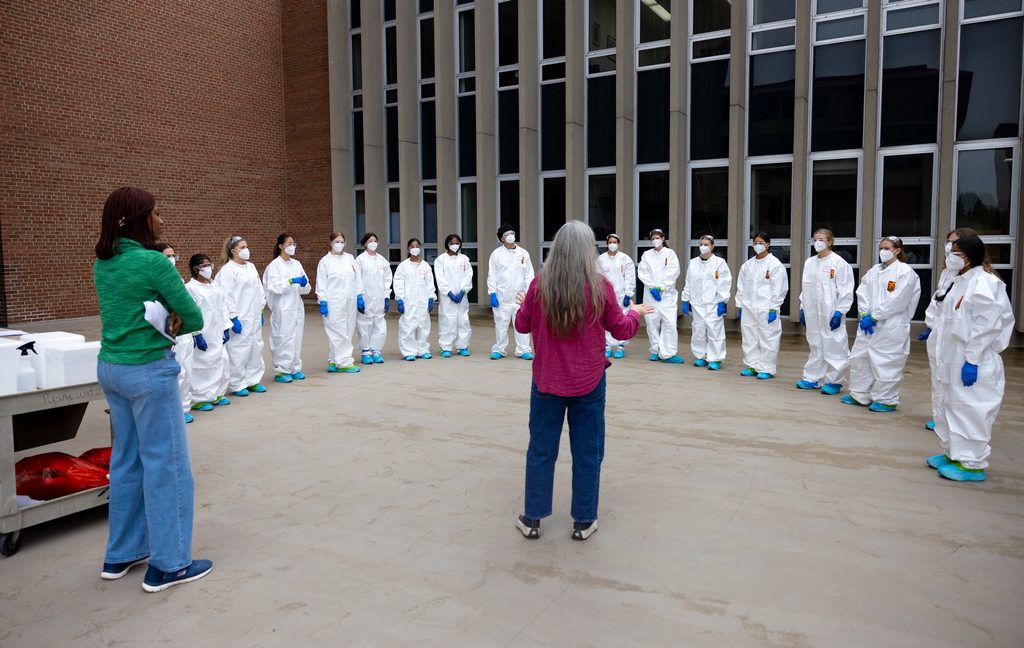
First-year students participate in mock outbreak event to better understand public health protocols
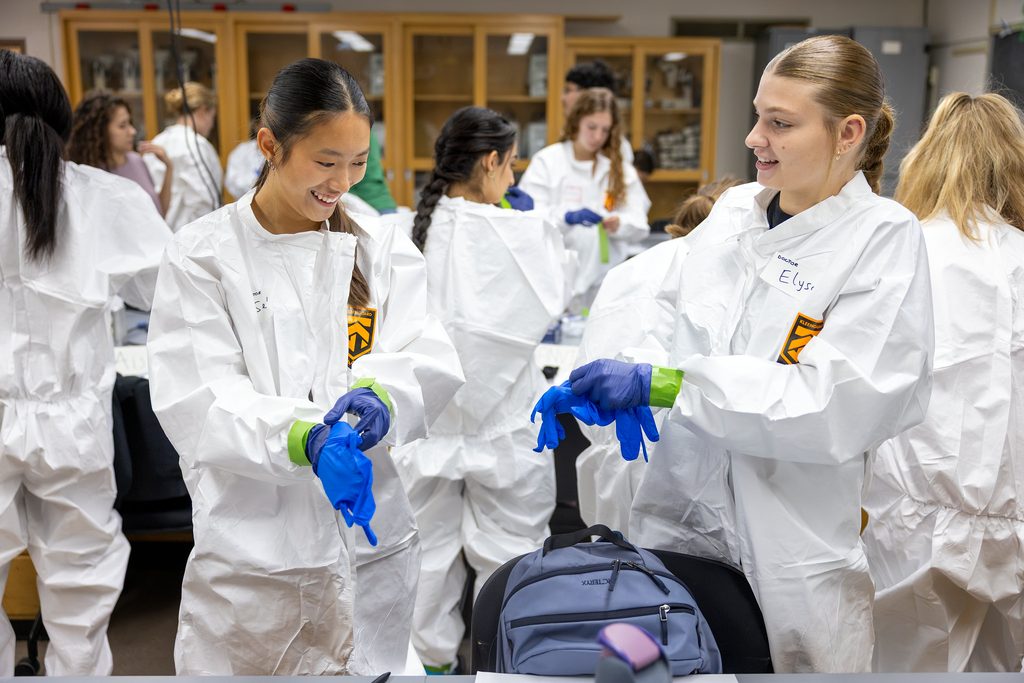
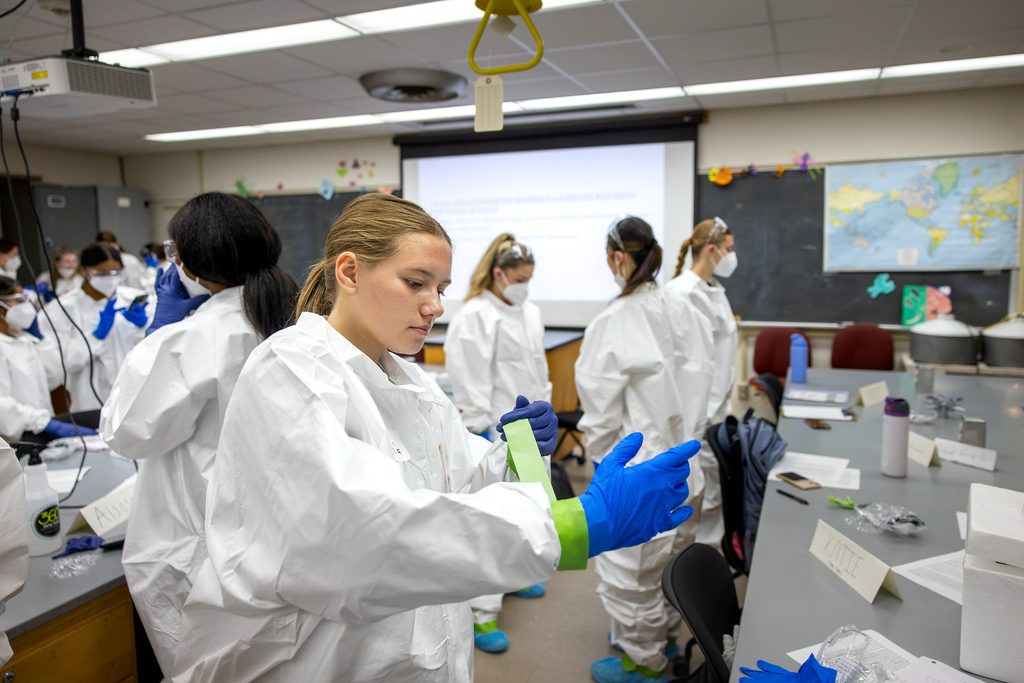
On Wednesday, September 30, students in Entomology 375 stepped into white protective coveralls, secured latex gloves on their hands with tape and placed masks and safety goggles over their faces. While it looked like a scene from a movie, it was, in fact, an exercise in disease identification and control. The students were part of a First-Year Interest Group class called One Health: Connecting Human, Animal, and Environmental Health, and they were playing out public health scenarios to better understand the procedures and cautionary steps taken when a disease outbreak is suspected.
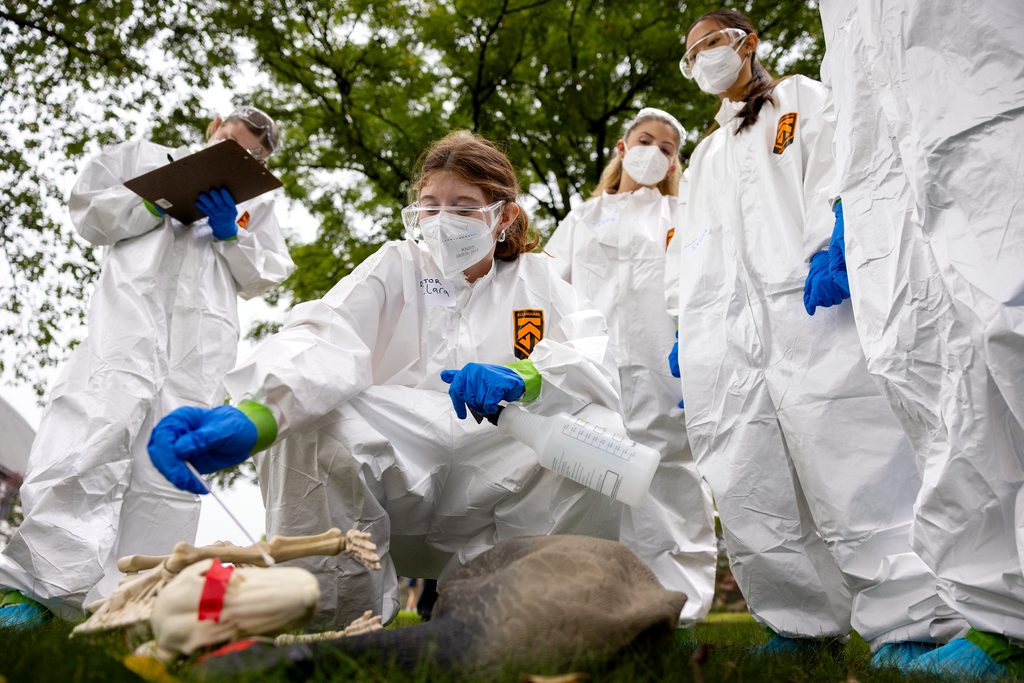
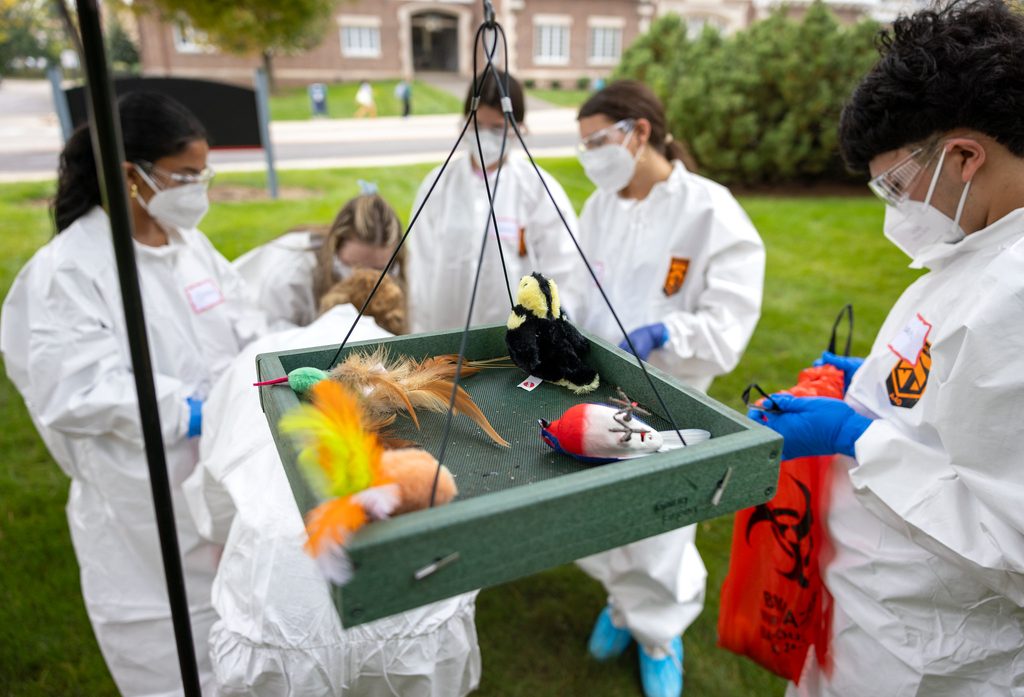
Students were given a scenario to investigate by instructors Lyric Bartholomay, a professor in the School of Veterinary Medicine’s Department of Pathobiological Sciences and Linda Oforka, teaching faculty in the Department of Entomology. In one scenario, for example, geese carcasses were turning up in spring, and live geese were acting strangely. In another, neighbors report dead songbirds and a squirrel in their yards.
Students chose from several roles to form investigative teams. They could be wildlife biologists, wildlife veterinarians, epidemiologists, infections disease specialists, microbiologists or communication specialists. They then asked questions to evaluate the incidents: 1) what could be causing the outbreaks, and could it threaten human or domestic animal health; 2) what data needs to be collected at a given field site; and 3) what personal protection precautions need to be taken?
The experience encouraged students to explore the work involved in public health scenarios and consider the protocols when faced with unknown disease outbreaks. See the photos below to get a glimpse into the exercise.
Photos by Michael P. King/UW–Madison CALS.