

New faculty profile: Trevor Woolley studies coordination problems, non-market valuation of livestock production practices
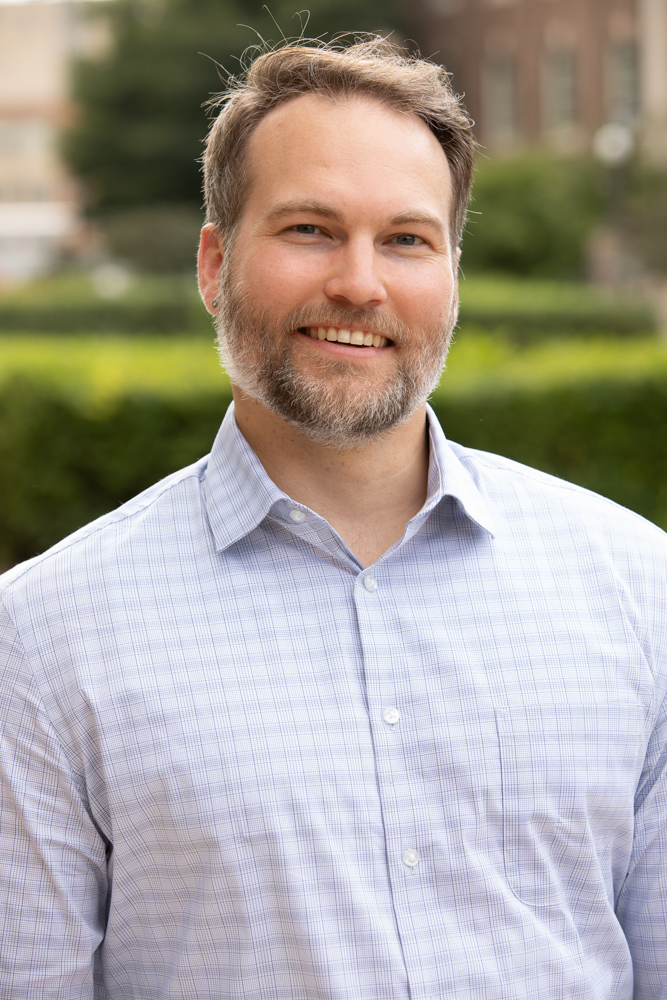
Trevor Woolley joined the UW–Madison faculty in June 2026 as an assistant professor in the Department of Agricultural and Applied Economics. Funding for this position comes from the Dairy Innovation Hub, which has supported over a dozen faculty positions so far at UW–Madison, UW–Platteville and UW–River Falls. His position is also part of RISE-EARTH, the sustainability-themed focus area of the university’s Wisconsin RISE Initiative strategic hiring effort to solve grand challenges.
To learn more in-depth about Woolley’s research, read about his project to explore public willingness to pay for improved animal welfare in agriculture on the AAE website.
What is your hometown? Where did you grow up?
Thousand Oaks, California. Just north of Los Angeles, in Ventura County, where 25% of US strawberries are grown.
What is your educational/professional background, including your previous position?
I received my bachelor’s in Mathematics and Economics (double major) from Brigham Young University and my Ph.D. in Agricultural and Resource Economics from UC Berkeley. Between earning those degrees, I worked as a full-time research analyst (“pre-doc”) at the Wharton School of Business at the University of Pennsylvania.
What is your field of research, and how did you get into it?
My field of research is agricultural and environmental economics with a topical focus on livestock, especially dairy. Despite growing up in strawberry country, my interest in agriculture really didn’t kick off until college when I had the opportunity to visit a variety of farm operations in the Central Valley, courtesy of the University of California extension program. It was there, on those trips, that I learned the value of producer perspectives in generating research ideas.
What are the main goals of your current research program?
The broad goal I have for my research is to align public and producer interests. To that end, my research focuses on understanding public values and producer perspectives. This usually involves doing fun statistical work with large consumer, retailer, and voter datasets to recover willingness to pay/accept for various livestock production practices and uncover systemic drivers of public-producer misalignment.
What was your first visit to campus like?
My first visit to campus was when I came for interviews. It was the end of winter break, just before the start of Spring semester. It was cold, but not enough to scare me away! Although I grew up in California, I’ve also lived through more than a decade of snowy winters, including a couple in Russia. On campus, I had the opportunity to visit some impressive facilities like the Center for Dairy Research and meet with amazing faculty and stakeholders. Most universities say they value collaboration across disciplines, but UW shows it. That was really appealing.
What classes do you teach?
I teach courses on food systems and environmental economics. And for seven semesters during my PhD, I developed and taught a course on how to combine tools from the social sciences with the philosophy of ethics to prioritize global issues and identify their root causes. I hope to bring this course to UW in the near future.
What’s the most important lesson you wish to convey to students?
I want students to appreciate the power of economic tools for understanding why the world is imperfect. Economics is about systems and incentive structures. Problems—even really big ones—don’t always have nefarious actors or conspirators to blame. Sometimes, problems involve many (often well-intentioned and informed) people responding to incentives that just exist. Adjusting those incentives can improve outcomes. The better we understand the “game,” the better prepared we will be to avoid or address the unintended consequences.
But for all students, not just in my classes: Don’t ever let difficulty be a barrier to what you want to do or learn. Challenge yourself and your beliefs, get uncomfortable. Nothing worth learning is easy at first.
Do you feel your work relates to the Wisconsin Idea? If so, how?
Absolutely. As an affiliate of the Dairy Innovation Hub, all my work is intended to inform decision-making by stakeholders and policymakers. I believe that if we understand the drivers of value misalignment from all perspectives, then we can create incentive structures that make us all better off. For example, a recent publication of mine uncovers the economic (dis)incentives for improving animal welfare in four livestock industries: layer hens, broiler chickens, hogs, and dairy cows. This exercise highlights the producer perspective and sheds light on the kinds of incentives that are more/less likely to improve farm animal conditions on the margin. In other work, I estimate consumer and voter demand for welfare-improving farm practices. These results can be used by both producers and policymakers to learn about and respond to public values. Only when we accurately understand all perspectives can progress be made. My work sits on their intersection.
What’s something interesting or surprising about your area of expertise that will make us sound smarter at parties?
Did you know that economists can price things that don’t have a market price? We call it “non-market valuation” and it usually involves looking at the relationship between unpriced attributes of a product or asset and the market prices of the product/asset with such attributes. We can use this to answer things like “How much are consumers willing to pay for grass-fed beef?” or “How much are homeowners willing to pay to live in a particular school district?”
What are your hobbies and other interests?
I love making music and exploring nature with my wife and sons (2 and 4 years old). We play guitar, banjo, ukulele, various flutes, and bongo drums. On Sundays, we go on bike rides to the many parks and trails around Madison. I also dabble in calligraphy, languages, history, and tabletop games.