

New faculty profile: Licheng Liu uses knowledge-guided machine learning to study sustainability of ag and natural ecosystems
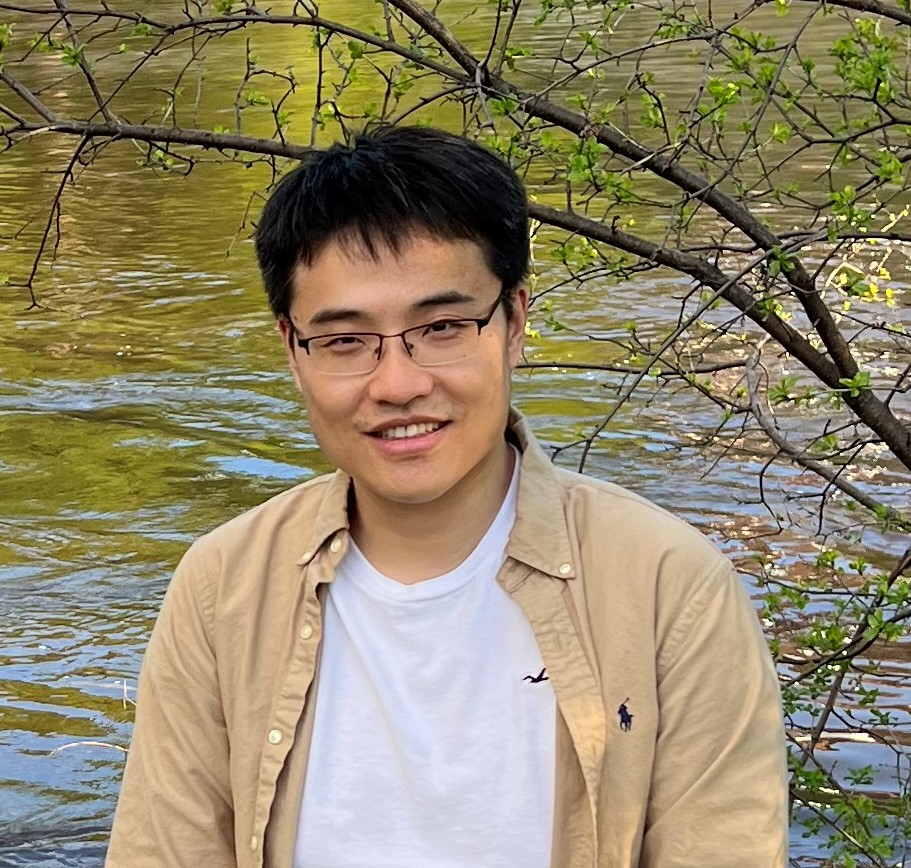
Licheng Liu joined the UW–Madison faculty in January 2026 as an assistant professor in the Department of Biological Systems Engineering. His position is part of RISE-AI, the technology-themed focus area of the university’s Wisconsin RISE Initiative strategic hiring effort to solve grand challenges.
What is your hometown? Where did you grow up?
Urumqi, Xinjiang, China.
What is your educational/professional background, including your previous position?
I received my bachelor’s degree from Peking University and my Ph.D. from Purdue University. After completing my doctorate, I joined the University of Minnesota in the Department of Bioproducts and Biosystems Engineering, where I progressed from a postdoctoral researcher to a senior research scientist.
What is your field of research, and how did you get into it?
My research focuses on advancing the sustainability of agricultural and natural ecosystems by integrating AI/ML with scientific knowledge, an approach known as knowledge-guided machine learning (KGML). I began working on mechanism-based atmospheric and biogeochemical modeling in 2011, where I developed a deep understanding of the limitations of traditional process-based models, including incomplete process representation, poorly constrained parameters, and rigid model structures. A key turning point came in 2020 when I joined the University of Minnesota and started collaborating with Prof. Vipin Kumar, who introduced me to KGML through a hydrology application. The success of that work demonstrated the potential of combining data-driven methods with domain knowledge, and it motivated me to extend this approach to ecosystem science and engineering, which has since become the foundation of my research program.
What are the main goals of your current research program?
The main goal of my research program is to enable more informed, data-driven decision-making in regional agricultural systems and global natural ecosystems. I focus on developing advanced modeling frameworks that can improve our understanding, prediction, and management of complex environmental processes, particularly those related to food production and greenhouse gas emissions. At a more fundamental level, I am interested in exploring the boundaries of AI in biological and environmental systems. These systems are highly nonlinear, heterogeneous, and often governed by incomplete knowledge, which presents significant challenges for purely data-driven approaches. My work aims to address these challenges by advancing KGML, using it as a framework to integrate domain knowledge with modern AI methods. Through this, I seek to extend the capability of AI to better represent complex biological processes and to build more reliable and interpretable models for real-world applications. There’s more info on my group’s ECosystem Analytics and Intelligence Laboratory (ECAI) website.
What was your first visit to campus like?
My first visit to campus was on March 18, 2025, for my on-site interview. I was very grateful for the opportunity and had prepared extensively, although I was also a bit nervous. The climate felt quite familiar, similar to Minneapolis, with cold weather and some ice on the streets, but the city itself seemed a bit more vibrant and busy. In contrast to the weather, everyone I met was exceptionally warm and welcoming, which left a strong impression on me. One particularly memorable moment was the dinner the department hosted at Draper Brothers Chophouse. We had a table with a direct view of the state capitol, and I truly enjoyed the conversation, the atmosphere, and the beautiful view. It was a very special experience that made me feel both welcomed and excited about the opportunity to join the community.
What classes do you teach?
I am not teaching in my first year due to a teaching release, but I plan to contribute to courses that introduce the foundations of ecosystem science and engineering, with an emphasis on how these principles can be translated into modeling and digital representations of real-world systems. I am also interested in developing a new course focused on knowledge-guided machine learning, where students can apply these methods to ecosystem-related questions aligned with their own research interests. Previously, at the University of Minnesota, I taught courses in Ecological Engineering Principles and Computer Applications.
What’s the most important lesson you wish to convey to students?
The most important lesson I hope to convey to students is that applying what they learn to real-world problems is the most effective way to develop deep understanding. Knowledge becomes meaningful when it is used to ask and answer questions that matter. At the same time, we are now in an AI-driven world where learning often happens alongside AI tools. I think this is a positive development, but it is important that AI supports learning rather than replaces it. A strong foundation in a specific field is what allows students to critically evaluate results, ask the right questions, and guide AI effectively. Let you drive AI, not AI drive you.
Do you feel your work relates in any way to the Wisconsin Idea? If so, please describe how.
Yes, I believe my work aligns with the Wisconsin Idea. My research is designed not only to advance scientific understanding, but also to translate that knowledge into practical tools that can benefit agriculture, environmental management, and society more broadly. For example, my work on knowledge-guided machine learning aims to improve decision-making in areas such as crop production and methane emissions, helping stakeholders, from farmers to policymakers, make more informed and sustainable choices. More broadly, I view my role as bridging fundamental science and real-world application, ensuring that advances in AI and ecosystem science extend beyond academia and contribute to solving pressing societal challenges.
What’s something interesting about your area of expertise that you can share that will make us sound smarter at parties?
One interesting fact is that carbon dioxide is not the only important greenhouse gas, methane (CH₄) is actually about 30 times more potent than CO₂ over a 100-year period. It is typically produced under low-oxygen conditions, such as in wetlands, and then released into the atmosphere. A surprising discovery from recent field studies is that trees themselves can act as major pathways for methane emissions. In one study in the Peruvian Amazon, researchers placed chambers on tree stems and found that methane emissions from the stems could be more than 1,000 times higher than emissions directly from the surrounding soil. This happens because trees can transport methane produced in waterlogged soils through their internal vascular systems and release it into the atmosphere. It is a good reminder that even familiar ecosystems can have hidden processes that significantly affect the global climate system.
What are your hobbies and other interests?
In my free time, I enjoy a mix of outdoor and indoor activities. I like swimming, hiking, and cycling as my main sports, and swimming has been especially important since living in the Midwest, where long winters often call for indoor activities. I also have a strong interest in food—I enjoy exploring different cuisines and experimenting with cooking myself. In addition, I like science fiction and video games, particularly strategy-based games, which I find both relaxing and intellectually engaging.