

J.P. van Pijkeren named director of Food Research Institute
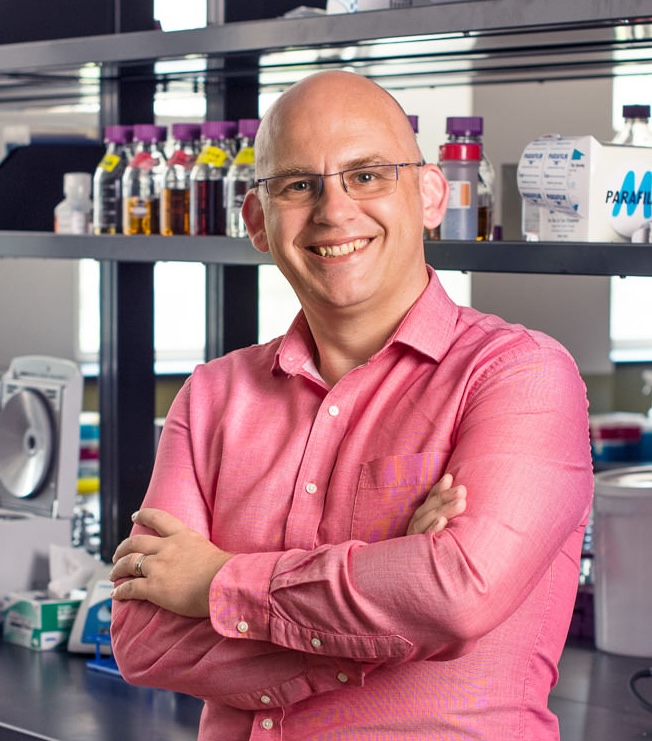
J.P. van Pijkeren, professor in the Department of Food Science, has been named the faculty director of the Food Research Institute at the University of Wisconsin–Madison. He started the position on March 1.
The Food Research Institute (FRI), which was established at the University of Chicago in 1946 and moved to UW–Madison in 1966, is a leader in identifying and resolving food safety issues to meet community, government and industry needs. The mission of the institute is to catalyze multidisciplinary and collaborative research on microbial foodborne pathogens and toxins and to provide training, outreach, and service to enhance the safety of the food supply.
Van Pijkeren joined the UW–Madison faculty in 2013 as an assistant professor and has since been affiliated with FRI. His research program focuses on unraveling mechanisms by which probiotic bacteria interact with and thrive within the host, knowledge that his group leverages toward the development of next-generation probiotics.
In the role of FRI director, van Pijkeren is responsible for providing leadership and vision for FRI, developing and maintaining connections with industry sponsors and government representatives, and growing funding for FRI programs and activities.
“J.P.’s energy and scientific expertise at the nexus of food science and microbial systems position him well to guide FRI into its next chapter,” says Troy Runge, CALS associate dean for research and extension. “He follows Chuck Kaspar, whose steady leadership served FRI well, and I’m confident J.P. will continue that strong trajectory.”
Much of van Pijkeren’s research centers on Limosilactobacillus reuteri, until recently known as Lactobacillus reuteri. L. reuteri is an important gut symbiont, and select strains have demonstrated health-promoting, i.e., probiotic, properties. Over the years, the van Pijkeren lab has invested in developing genetic tools for use in L. reuteri and other lactic acid bacteria. These tools allow the lab to unravel the molecular interactions between probiotic bacteria and vertebrate host, understand the interplay between diet and probiotics and develop probiotic bacteria as therapeutic delivery vehicles.
The FRI director position was previously held for nearly five years by Chuck Kaspar, professor in the Department of Bacteriology, who recently stepped down and plans to remain involved in the institute.