

New faculty profile: Rajdeep Khangura studies cereal crop genetics
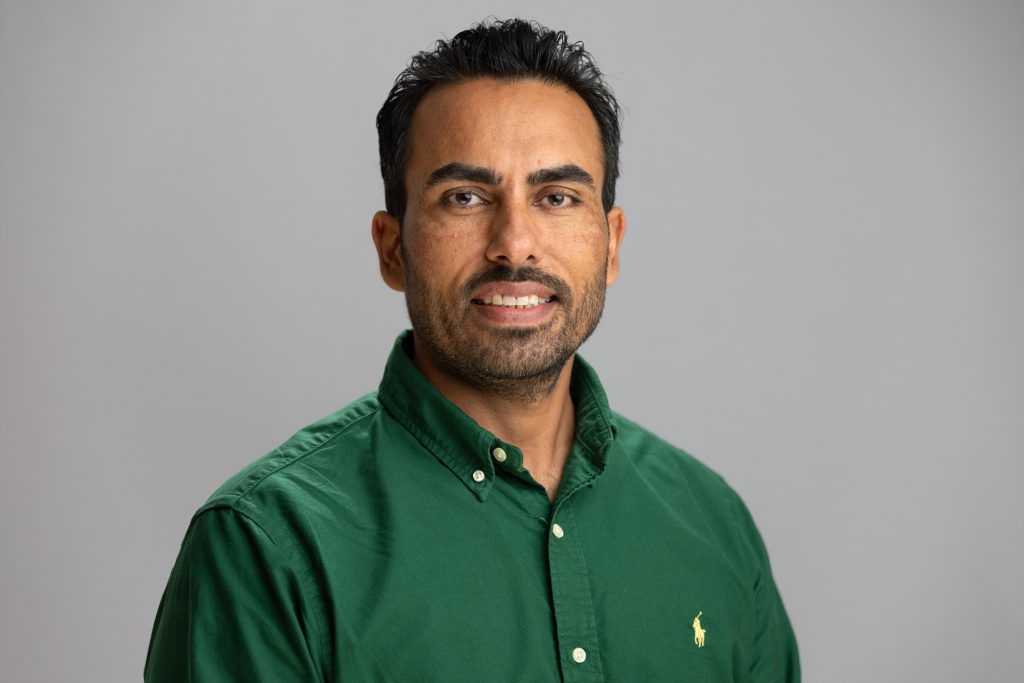
Rajdeep Khangura joined the UW–Madison faculty in June 2025 as an assistant professor in the Department of Plant and Agroecosystem Sciences. His position is part of RISE-EARTH, the sustainability-themed focus area of the university’s Wisconsin RISE Initiative strategic hiring effort to solve grand challenges.
What is your hometown? Where did you grow up?
I grew up in Baranhara, a small village in the Northern Indian state of Punjab.
What is your educational/professional background, including your previous position?
I did my undergraduate and master’s degrees in plant breeding and plant genetics at Punjab Agricultural University, Punjab. After that, I pursued a PhD in plant genetics at Purdue University. My interest in population genetics led me to pursue a USDA NIFA postdoctoral fellowship with Professor Brian Dilkes in Purdue’s biochemistry department, where I further developed my expertise in integrating Mendelian and population genetics with omics approaches to identify genes and mechanisms underlying plant immunity and developmental traits in maize and sorghum.
What is the main focus of your research and projects at UW-Madison?
Our lab is broadly interested in understanding the genetic basis of plant phenotypes in cereal crops relevant to improving agronomic performance. Specific projects in the lab include characterizing novel sources of durable disease resistance in maize, sorghum and wheat. These projects have direct implications for crop health, yield and environmental sustainability. Other genetics-heavy projects include understanding plant architecture, optimizing hybrid seed production, and producing high-quality silage, all of which have practical applications in agriculture.
How did you get into this line of research?
My journey into the world of biology started in rural India, where I spent my childhood working on the farm alongside my dad. We grew a variety of crops, including wheat, rice, corn, clover, vegetables, and even poplar. I also helped my mom run our small dairy operation of about 15 milking cows and buffalo. Fun fact: We even gave each animal a name, and they all had unique personalities!
As a kid, I attended farm fairs organized by Punjab Agricultural University, the local ag university near my village. These ag fairs featured crop and vegetable specialists (breeders, agronomists, pathologists, entomologists, and soil scientists) who would help farmers with farm challenges. Even though I was primarily interested in fair food, I picked up a few things from these conversations. As a teenager, I understood the importance of improved crop varieties and superior cow genetics. My interest in genetics grew over time, leading me to pursue my degrees and a postdoctoral fellowship.
What was your first visit to campus like?
I visited Madison for the first time in February 2025 for my in-person interview. I honestly didn’t know there were so many lakes here. I saw people ice fish for the first time in Lake Monona. I was really impressed by the beauty of the UW-Madison campus and how it is integrated with the city, and I just knew this must be a great place to live. As I was driving back to Indiana after my interview, I had one wish: to come back to UW-Madison, and my wish came true!
What courses are you / will you be teaching?
This semester, I’m teaching PLANTSCI 957, Seminar in Plant Breeding and Plant Genetics. I’m still working with the department to finalize other courses I will teach in the future, so the details aren’t set yet.
What’s one thing you hope students who take a class with you will come away with?
I hope students get to appreciate genetic diversity and how it shapes the world around us. I like to provide as much hands-on training as possible, so I hope these experiences encourage interaction with plants and spark curiosity, making learning more enjoyable.
Do you feel your work relates in any way to the Wisconsin Idea? If so, please describe how.
Yes – but first, I must tell you a personal story about the Wisconsin Idea! My parents ran a milk cooperative in Punjab, India, where dairy farmers from nearby villages sold milk. When I was nine or 10, every day I used to measure the fat content of dozens of milk samples with my dad, using the “Babcock test.” I just learned the name of this test six months ago, when I went to get an ice cream at the Babcock Dairy Store during my very first week on campus. When I read the commemorative plaque inside, I was awestruck. I immediately took a picture of it and shared it with my parents, and they were amazed. When I first learned about the Wisconsin Idea during faculty orientation, I knew what it meant in a global context because I had experienced it.
My lifelong connection with agriculture and dairy provides me with a strong foundation to partner with growers in Wisconsin and embody the Wisconsin Idea. Our lab is working on both fundamental and applied aspects of plant characteristics, providing knowledge that will enable the development of superior genetics and resources for plant breeders, ultimately benefiting growers. We are also exploring ways to develop and expand markets for millets, such as sorghum, in Wisconsin and the northern U.S. We are developing new tools and methodologies to reduce the time to develop cultivars and help breeders operate at scale. I am eager to connect with growers to learn more about the challenges they face in Wisconsin, so we can better direct our efforts to address them.
What’s something interesting about your area of expertise that you can share that will make us sound smarter at parties?
You probably know that the genomes of all plants and animals encode similar proteins that perform very similar functions. My lab works on one such protein, which is required for neurotransmission in animals and rapid cell-to-cell communication in plants. Isn’t it cool that plant cells have molecular components like a neuron to communicate within a cell, and also with other cells?
What are your hobbies and other interests?
My wife and I enjoy long walks and trail running around Madison. We both love trying out all the delicious cuisines that the city has to offer. We occasionally take spontaneous road trips on the weekends to nearby towns, and we have been pleasantly surprised by Wisconsin’s beauty every time. In the summer, I love being out in the corn and sorghum fields at the West Madison Ag Research Station.