

New faculty profile: Malia Jones focuses on spatial clustering of vaccine hesitancy
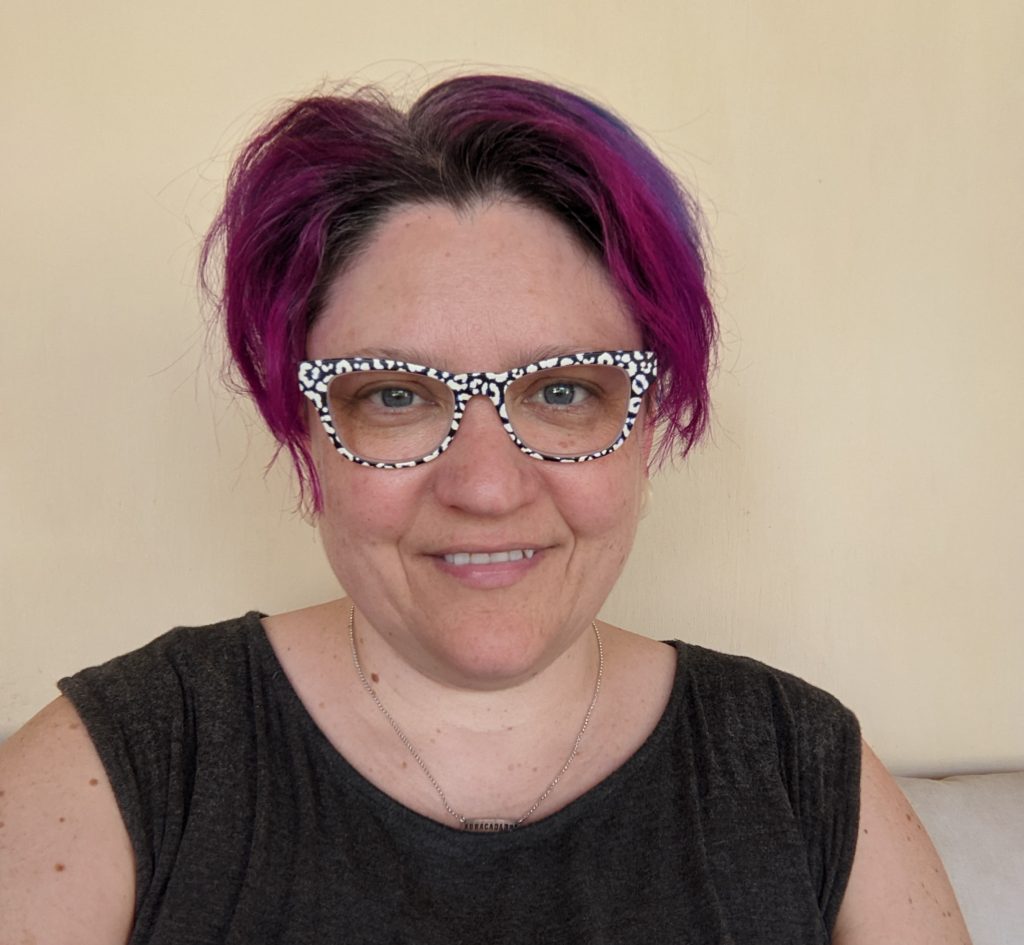
Malia Jones joined the UW–Madison faculty in August 2022 as an assistant professor in the Department of Community and Environmental Sociology.
What is your hometown? Where did you grow up?
My parents bounced around for the first few years of my life, and then settled in the panhandle of Idaho until I was 10 years old. Then we moved to a suburb of Philadelphia, Pennsylvania. But the place I have lived the longest in my life is Los Angeles, CA.
What is your educational/professional background?
I have a B.A. from American University in Washington, D.C., where I majored in philosophy in the class of 1999. Then I worked at the RAND Corporation for several years as a project manager in nursing home quality research. I earned a PhD and master’s degree in public health at UCLA (2012 and 2008 respectively), where I had predoctoral fellowship training in demography. I also completed a postdoc at the University of Southern California in preventative medicine.
What is your field of research, and how did you get into it?
My work all centers around questions about the places people spend time, and how those places affect health at the population level. I’ve studied chronic and infectious disease outcomes, but most recently I have been working on the problem of clustering in vaccine behavior. We tend to see people who are vaccine-hesitant clustering together, socially and spatially — which is of course a problem when it comes to outbreak risk. I’ve also spent a lot of the pandemic working on science communications.
What are the main goals of your current research program?
My research seeks to understand the causes of vaccine hesitant clusters, and to quantify the extent to which those clusters increase outbreak risk.
What attracted you to UW–Madison?
Well, the commute was a big improvement! Riding my bike along Lake Mendota on my way to work each day is nothing like Los Angeles traffic. Actually, I’ve been at UW–Madison as a scientist for seven years. I didn’t even get a new office! When I originally came to Madison, I was really excited to focus on health geography work within the interdisciplinary environment at the Department of Community and Environmental Sciences, including with the Applied Population Laboratory. Now, I’m transitioning into a new role and I am excited to be working with students in the joint sociology program, teaching in the Global Health major, and continuing my research program in the Department of Community and Environmental Sciences.
What was your first visit to campus like?
The first time I came to campus was in the middle of a polar vortex. It was quite cold. Frozen Lake Mendota looked like the surface of the moon to me. My two boys got to see snow for the first time in their lives.
What’s one thing you hope students who take a class with you will come away with?
I hope my students take away a sincere curiosity about why racial, economic, and gender health disparities exist. There is a lot to be learned—at the societal level and also at a very personal level—by answering that question.
Do you share your expertise and experiences with the public through social media? If so, which channels do you use?
During the pandemic, I accidentally founded a social media-based science communication platform called Dear Pandemic. You can find it at www.dearpandemic.org or on Facebook, Instagram, Twitter, and LinkedIn. I no longer share professionally on my own social media. The personal attacks and petty arguments are really exhausting, and Dear Pandemic’s collaborative approach is a lot stronger anyway, I think.
Do you feel your work relates in any way to the Wisconsin Idea? If so, please describe how.
Yes! I strive every day to make my research – and public health research in general – useful to all the people in the state of Wisconsin, and beyond. One example is through Dear Pandemic. What we do is translate the latest public health guidance into practical, actionable, and readily-accessible short messages, and post them on social media so they can be shared and received passively in people’s feeds. That is, we deliver science to the people who can use it today.
What’s something interesting about your area of expertise you can share that will make us sound smarter at parties?
Vaccine hesitancy is nothing new. It’s been around for as long as vaccines. Some people worried that cowpox innoculation (to prevent smallpox) would turn us all into cow-human hybrids, way back when Edward Jenner introduced it in 1796. I think that 220-year-old bit of misinformation has amazing parallels to today’s misconceptions that mRNA vaccines will change our DNA.
What are your hobbies and other interests?
My husband and I have been married for going on 21 years and we have two wonderful boys. We love to travel together. Last year, we visited the Provence region of France and got to see the lavender in bloom. I also love the Great Lakes. This summer I visited the Porcupine Mountains in the UP with a friend. We hiked the Lake Superior trail. It was wonderful.